

Student-Centred Learning
Many schools describe themselves as Student-Centred Learning (SCL) environments. This sounds wonderful, but it really means everything and nothing.
What follows is how we wish to define the term at IC, and how we plan our curriculum and lessons accordingly.
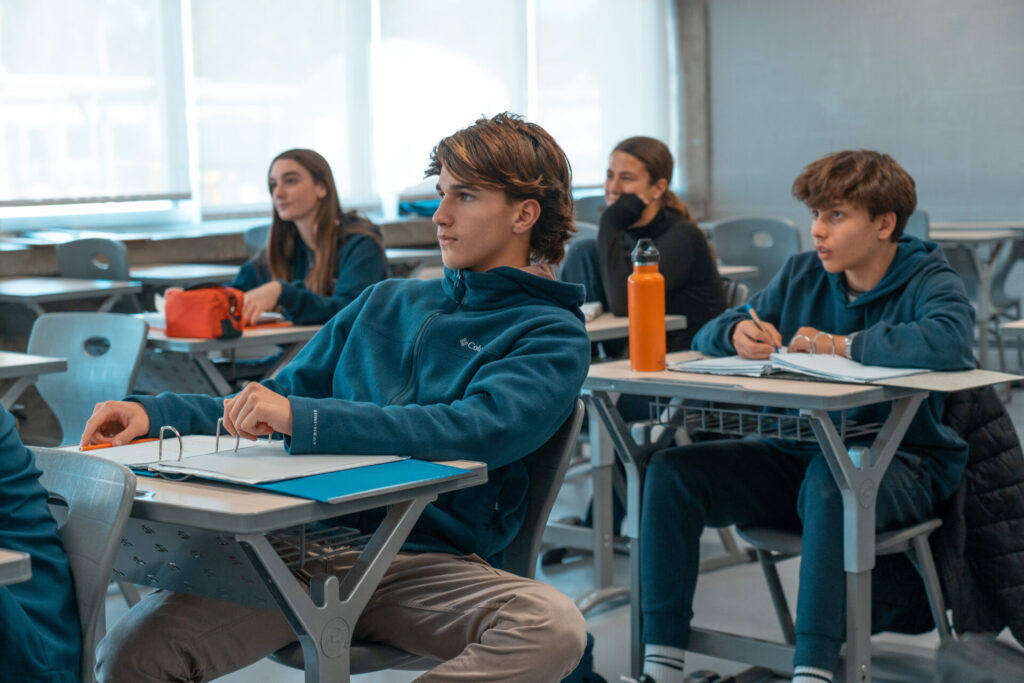
Historically, most teachers were generally more like lecturers. This style of learning has many names, but we will use directed instruction. Teachers presented the information and the students received it. Students spent the majority of their time listening and there was little, if any, group work. Students answered questions but were not encouraged to ask questions unless they were directed by the teacher. Students were often set tasks to do, and this involved a lot of reading, and researching information from textbooks or other printed sources. It has been said that the teacher was ‘the sage on the stage’, and the focus in the room was the teacher and not the student. The student was said to be a passive learner. However, many who disparage this style forget that the teacher still wanted the students to achieve, they just taught differently.
Historically, most teachers were generally more like lecturers. This style of learning has many names, but we will use directed instruction. Teachers presented the information and the students received it. Students spent the majority of their time listening and there was little, if any, group work. Students answered questions but were not encouraged to ask questions unless they were directed by the teacher. Students were often set tasks to do, and this involved a lot of reading, and researching information from textbooks or other printed sources. It has been said that the teacher was ‘the sage on the stage’, and the focus in the room was the teacher and not the student. The student was said to be a passive learner. However, many who disparage this style forget that the teacher still wanted the students to achieve, they just taught differently.
Before going any further, it needs to be stated very clearly that IC does not believe that directed instruction should never happen. However, the frequency will depend on the age of the child, the subject, and the activity. We are saying, very categorically, that this type of learning should not happen all of the time.
In summary;
- The focus is more on the teacher.
- The teacher chooses the topics.
- The teacher talks and the students listen.
- What the teacher knows about the subject takes priority.
- Students generally work alone.
- The teacher is solely responsible for answering students’ questions.
- The teacher monitors and corrects student work.
- The teacher evaluates students’ performance and evidence of learning.
Before going any further, it needs to be stated very clearly that IC does not believe that directed instruction should never happen. However, the frequency will depend on the age of the child, the subject, and the activity. We are saying, very categorically, that this type of learning should not happen all of the time.
In summary;
- The focus is more on the teacher.
- The teacher chooses the topics.
- The teacher talks and the students listen.
- What the teacher knows about the subject takes priority.
- Students generally work alone.
- The teacher is solely responsible for answering students’ questions.
- The teacher monitors and corrects student work.
- The teacher evaluates students’ performance and evidence of learning.
SCL is a term difficult to define but has certain characteristics. It is argued that it puts students' needs ahead of the teachers. This would appear obvious, but the basic principles involve giving students more autonomy in the class, whether it is in planning, learning or assessment. Students should feel some ownership of their learning. The teacher’s role is said to be more of the ‘guide on the side’. This term is misleading because the teacher is still the authority figure in the classroom.
Below are some ideas for SCL:
- The focus is shared by both the students and their teacher.
- Students may have some choice in the topics they cover.
- The teacher develops a concept or challenge, then invites students to explain or demonstrate it to the class.
- The students interact with their teacher and one another during the lesson.
- Students work in pairs, in groups or alone depending on the activity.
- The teacher provides feedback or corrections when questions arise.
- Students answer each other’s questions.
- Students evaluate their own learning alongside the teacher, and peer evaluation is positive.
- Students develop self-management skills.
- The classroom is lively, but orderly and organised.
SCL is a term difficult to define but has certain characteristics. It is argued that it puts students' needs ahead of the teachers. This would appear obvious, but the basic principles involve giving students more autonomy in the class, whether it is in planning, learning or assessment. Students should feel some ownership of their learning. The teacher’s role is said to be more of the ‘guide on the side’. This term is misleading because the teacher is still the authority figure in the classroom.
Below are some ideas for SCL:
- The focus is shared by both the students and their teacher.
- Students may have some choice in the topics they cover.
- The teacher develops a concept or challenge, then invites students to explain or demonstrate it to the class.
- The students interact with their teacher and one another during the lesson.
- Students work in pairs, in groups or alone depending on the activity.
- The teacher provides feedback or corrections when questions arise.
- Students answer each other’s questions.
- Students evaluate their own learning alongside the teacher, and peer evaluation is positive.
- Students develop self-management skills.
- The classroom is lively, but orderly and organised.
Not all of these actions will be seen in every class, and the extent will depend on the age of the students, the subject and the task at hand. However, all learning should build on prior knowledge, and this is where the teacher will decide in which direction the learning will go.
In many cases, it is not possible for a student to be involved in choosing what they learn, nor might it be desirable. An international syllabus which terminates in a formal examination is one example of this.
In a SCL environment, students develop both collaboration and communication skills. Students tend to be more interested in learning when they can interact with one another and participate actively in their own education. Students learn to interact with others as part of the learning process, although they will also learn independently at times.
Group work is part of learning at IC. Project-based learning will also occur when appropriate, for this is often the best way to see collaborative group work in action. However, the teacher must develop the necessary skills with the students for group work to be successful.
The IBO identifies five skills for Approaches to Learning. These are:
- Self-Management Skills
- Social Skills
- Communication Skills
- Research Skills
- Thinking Skills
All of these are present in an SCL environment.
A SCL environment only happens when the teacher and the student are aligned and take responsibility for their actions.
Not all of these actions will be seen in every class, and the extent will depend on the age of the students, the subject and the task at hand. However, all learning should build on prior knowledge, and this is where the teacher will decide in which direction the learning will go.
In many cases, it is not possible for a student to be involved in choosing what they learn, nor might it be desirable. An international syllabus which terminates in a formal examination is one example of this.
In a SCL environment, students develop both collaboration and communication skills. Students tend to be more interested in learning when they can interact with one another and participate actively in their own education. Students learn to interact with others as part of the learning process, although they will also learn independently at times.
Group work is part of learning at IC. Project-based learning will also occur when appropriate, for this is often the best way to see collaborative group work in action. However, the teacher must develop the necessary skills with the students for group work to be successful.
The IBO identifies five skills for Approaches to Learning. These are:
- Self-Management Skills
- Social Skills
- Communication Skills
- Research Skills
- Thinking Skills
All of these are present in an SCL environment.
A SCL environment only happens when the teacher and the student are aligned and take responsibility for their actions.
Responsibilities of the Teacher
- Provide interesting and stimulating classes.
- Follow the curriculum, whether it is a formal examination syllabus or the school's own.
- Allow students a voice in the content when appropriate.
- Encourage all students to participate in discussion.
- Devise a mixture of learning situations, whether it is teacher-directed, independent research or pair of larger group work.
- Provide regular formative feedback.
- Enable students to give peer-to-peer feedback.
- Set appropriate summative tests, and give advance warning of the contents and nature of the test.
Responsibilities of the Student
It is worth referring to the IC core values: Respectful, Responsible, Kind, Engaged. Every student has an obligation to make a constructive contribution to the class and to never disrupt the learning of others.
- Be respectful to their teacher and classmates.
- Be responsible for their own learning. Students cannot expect the teacher to do everything for them.
- Be kind in every action.
- Be engaged in their learning.
- Meet deadlines.
- When doing group work, respect their classmates by completing their tasks in the group.
- Make honest peer evaluations.
Responsibilities of the Teacher
- Provide interesting and stimulating classes.
- Follow the curriculum, whether it is a formal examination syllabus or the school's own.
- Allow students a voice in the content when appropriate.
- Encourage all students to participate in discussion.
- Devise a mixture of learning situations, whether it is teacher-directed, independent research or pair of larger group work.
- Provide regular formative feedback.
- Enable students to give peer-to-peer feedback.
- Set appropriate summative tests, and give advance warning of the contents and nature of the test.
Responsibilities of the Student
It is worth referring to the IC core values: Respectful, Responsible, Kind, Engaged. Every student has an obligation to make a constructive contribution to the class and to never disrupt the learning of others.
- Be respectful to their teacher and classmates.
- Be responsible for their own learning. Students cannot expect the teacher to do everything for them.
- Be kind in every action.
- Be engaged in their learning.
- Meet deadlines.
- When doing group work, respect their classmates by completing their tasks in the group.
- Make honest peer evaluations.
At IC, we believe in a SCL environment, which means that the teacher focuses on the best interests of the students as a group. This is why students must be able to work collaboratively. The classroom must be a lively, vibrant learning environment, in which all students have the opportunity to participate and different teaching and learning styles can be seen.
At IC, we believe in a SCL environment, which means that the teacher focuses on the best interests of the students as a group. This is why students must be able to work collaboratively. The classroom must be a lively, vibrant learning environment, in which all students have the opportunity to participate and different teaching and learning styles can be seen.